
How to Stop Bees from Taking Over Your Feeder: A Parent’s Guide to a Bee-Proof Backyard
Disclosure: This post contains affiliate links. If you make a purchase through these links, we may earn a small commission at no extra cost to you. We only recommend products we believe in for the safety of our feathered friends.
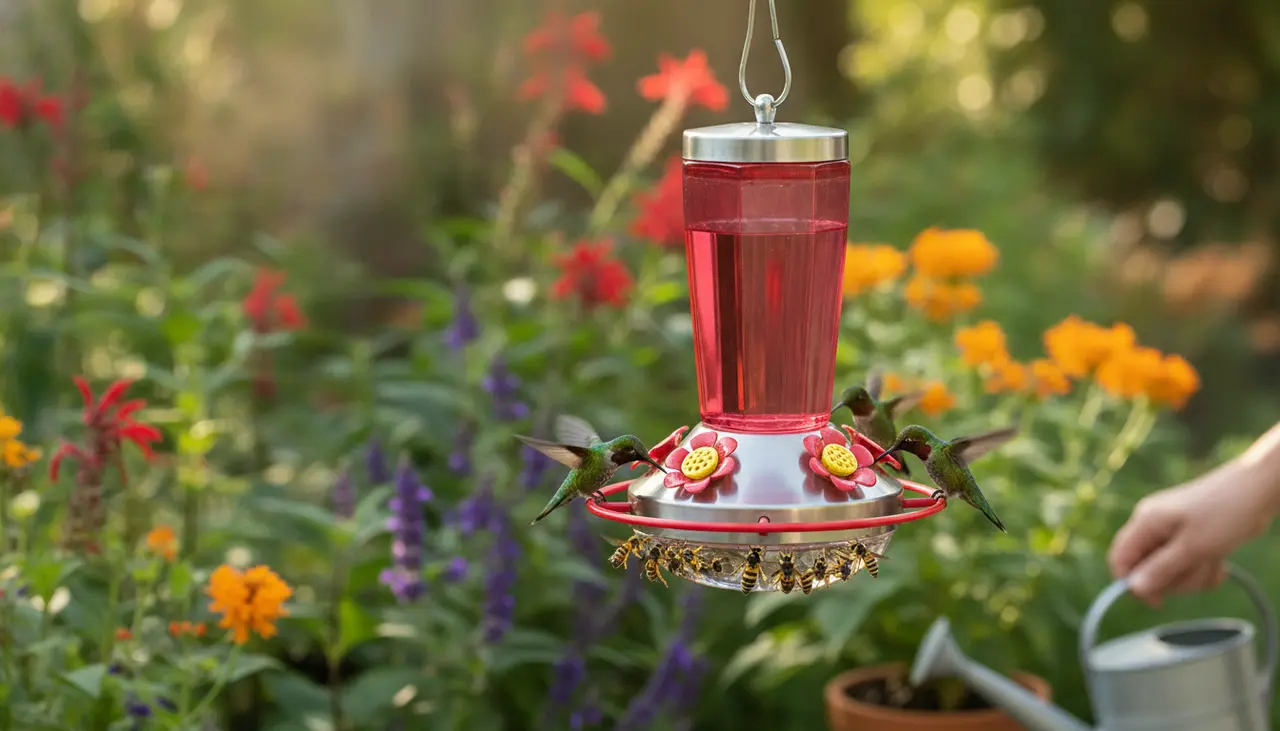
If you have ever finally sat down with a cup of coffee to watch your backyard visitors, only to see a swarm of yellow jackets bullying your favorite Ruby-throated Hummingbird away, you know how frustrating it can be. You want to provide a sanctuary, but sometimes it feels like you're just running a snack bar for every bee in the neighborhood.
To stop bees from taking over, the most effective solution is to switch to a saucer-style hummingbird feeder or install nectar guards (small flexible tips) on your existing feeder. These designs take advantage of the hummingbird's long tongue while keeping the nectar levels just out of reach for bees and wasps.
Who This Guide Is For
This guide is for the hobbyist gardener and the busy parent who doesn't have hours to spend "policing" the backyard. If you want a low-maintenance, "set it and forget it" solution that keeps your hummingbirds safe and your feeder insect-free, you’re in the right place.
Understanding the "Bee-Proof" Design
Not all feeders are created equal. When searching for a bee proof hummingbird feeder, you are looking for specific mechanical barriers that separate the insect from the sugar water.
| Feeder Feature | How It Stops Bees | Best For |
|---|---|---|
| Saucer Design | Nectar sits lower than the feeding port. | Windier areas and high-bee traffic. |
| Nectar Guards | Small silicone "valves" that only open for beaks. | Upgrading existing bottle feeders. |
| Bee Guards | Plastic cages/mesh over the port. | Preventing larger bees from landing. |
| Dry Ports | Ports designed to stay dry on the exterior. | Preventing "wicking" that attracts scouts. |
3 Simple Steps to a Bee-Free Feeder
1. Choose a Saucer-Style Feeder
In my experience, saucer feeders (like the HummZinger) are the gold standard for busy households. Because the nectar is held in a dish below the ports, the hummingbird can easily reach it with its long tongue, but a bee's mouthparts simply aren't long enough.
If you are currently using a traditional gravity-fed bottle, you might find it leaks when the sun heats the air inside the bottle, pushing nectar out of the ports. This "wicking" is like a neon sign for bees. Switching to a saucer eliminates this pressure-leak issue entirely. If you're still deciding on the right model, check out The Hummingbird Heart Master Buying Guide for our top-rated saucer recommendations.
2. Use Nectar Guards (Bee Tips)
If you love your current glass bottle feeder, don't worry—you don't necessarily have to replace it. Many brands, like Perky-Pet, offer "Nectar Guards." These are tiny, flexible plastic tips that slide into the feeding port. They act like a one-way valve; the hummingbird’s beak pushes through easily, but a bee cannot get past the closed slit.
3. The "Move It" Trick
Bees are creatures of habit. If they have found your feeder, they will keep coming back to that exact spot. If you move your feeder just 3 to 4 feet away, the hummingbirds (who have incredible spatial memory) will find it instantly. The bees, however, will often spend a day buzzing around the old empty space before giving up.
Beginner Mistakes to Avoid
- Using Red Dye: Never use store-bought nectar with red dye or add food coloring to your home mix. It is unnecessary and potentially harmful to the birds. Stick to The Ultimate 4:1 Hummingbird Nectar Recipe for a safe, clear solution.
- Greasing the Feeder: Some old-school tips suggest putting Vaseline or oil on the ports to make them slippery. Please avoid this. If oil gets on a hummingbird's feathers, they cannot preen correctly, which can be fatal.
- Ignoring the Yellow: Bees are naturally attracted to the color yellow. If your feeder has yellow "flowers" or bee guards, try painting them red with outdoor-safe, non-toxic paint, or look for all-red feeder models.
Practical Tradeoffs: Glass vs. Plastic
When looking for a bee-proof solution, you'll often choose between glass and plastic.
- Glass Feeders: These are beautiful and durable, but they are almost always "bottle-style" gravity feeders, which are more prone to the leaking that attracts bees.
- Plastic Feeders: While they may not feel as "premium," most high-quality saucer-style (bee-proof) feeders are made of high-impact polycarbonate. They are easier to clean in the dishwasher—a huge plus when you're juggling a busy family schedule.
Are Ant Moats Worth It?
While we are focusing on bees, ants are the other major "uninvited guest." Many bee-proof saucer feeders come with a built-in ant moat (a small well you fill with water). If yours doesn't have one, adding a hanging ant moat is the single best investment you can make for a clean feeding station. It keeps the nectar pure and prevents the "fermenting bug soup" that happens when insects fall in.
Frequently Asked Questions
Q: Will a bee-proof feeder also stop wasps? A: Yes. Most nectar guards and saucer designs work effectively against wasps and yellow jackets for the same reason—they simply cannot reach the liquid.
Q: Can I just put out a bowl of sugar water for the bees? A: It's generally not recommended. This can encourage more bees to congregate in your yard, and "distraction feeders" often end up attracting even more pests once the first bowl runs dry.
Q: Why are bees suddenly all over my feeder in late summer? A: As natural nectar sources dry up in the heat of August and September, bees become more desperate. This is the most important time to ensure your ports are clean and leak-free.
Managing a backyard habitat should be a source of joy, not another chore on your to-do list. By choosing the right gear, you can spend less time swatting away wasps and more time enjoying those magical, high-speed visits from your hummingbird friends.