
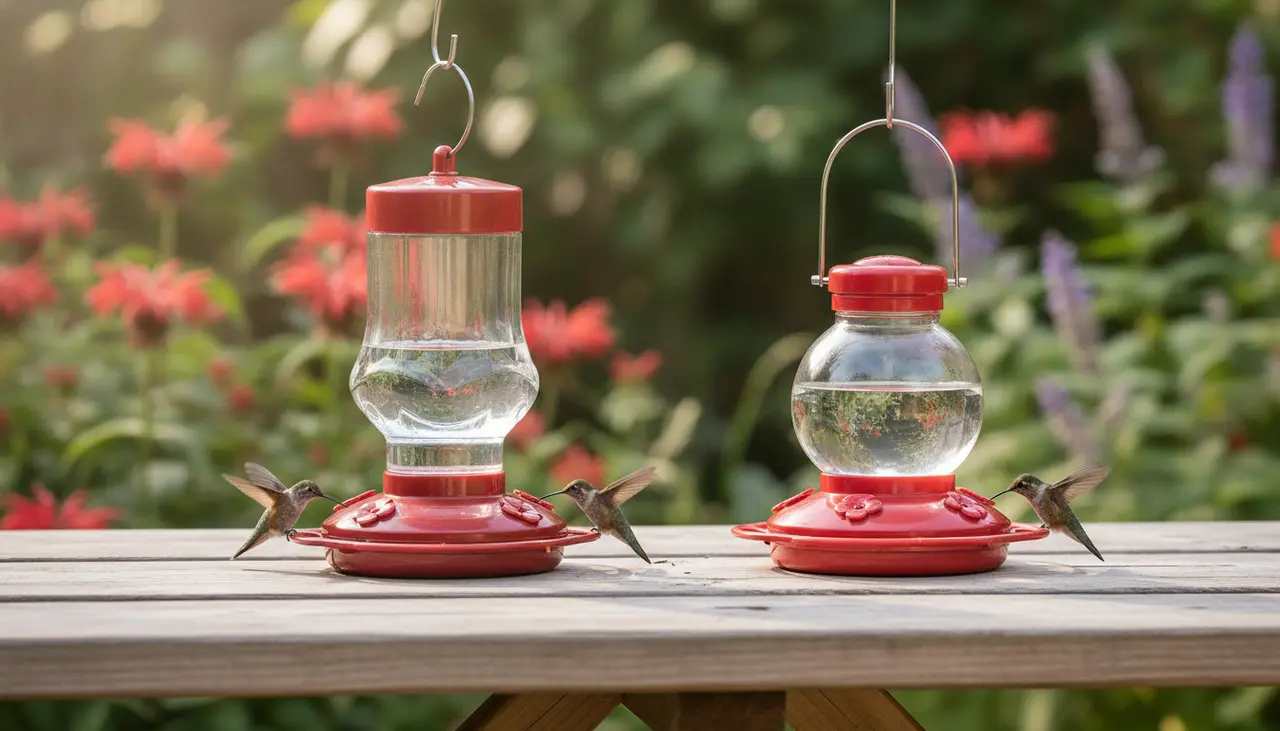
Perky-Pet vs First Nature: Which Feeder Wins for Your Backyard?
Disclosure: This post contains affiliate links. If you make a purchase through these links, I may earn a small commission at no extra cost to you. I only recommend products that help you create a safe, joyful habitat for your backyard visitors.
If you are looking for the best hummingbird feeder brand to anchor your backyard sanctuary, the choice often comes down to two heavy hitters: Perky-Pet and First Nature. Both brands are staples in the birding community, but they cater to very different styles of backyard management.
The Short Answer: If you prioritize classic aesthetics and the longevity of glass, Perky-Pet is the winner, particularly for those who want a decorative touch. However, if you are a busy homeowner who needs a feeder that can be deep-cleaned in seconds and holds a large volume of nectar for a growing colony, First Nature wins for its practical, wide-mouth plastic design and leak-proof seals.
Choosing the Right Feeder for a Busy Life
We’ve all been there: it’s a Tuesday morning, the kids are getting ready for school, you’re trying to find your coffee, and you notice the hummingbird feeder is looking a bit cloudy. In those moments, the "best" feeder isn't just the one the birds like—it’s the one that doesn't add stress to your to-do list.
This guide is for the hobbyist who wants to support their local Ruby-throated or Anna’s Hummingbirds without turning feeder maintenance into a second job. We are looking at durability, "clean-ability," and how well these feeders stand up to the elements.
Head-to-Head Comparison
| Feature | Perky-Pet (Classic Glass) | First Nature (Easy Clean) |
|---|---|---|
| Primary Material | Hardened Glass & Metal/Plastic | BPA-free Plastic |
| Cleaning Ease | Moderate (Requires bottle brush) | Excellent (Wide-mouth design) |
| Nectar Capacity | 8 oz to 32 oz | 16 oz to 32 oz |
| Leak Resistance | High (with proper base seal) | Exceptional (Two-part base) |
| Special Features | Built-in Ant Moats & Bee Guards | Low-profile perches |
| Durability | High (UV resistant) | Moderate (Plastic may fade over years) |
Perky-Pet: The Durable Classic
Perky-Pet has been the "household name" in birding for decades. If you’ve ever seen a red, pinch-waist glass bottle hanging in a garden, it was likely one of theirs.
Best for: Gardeners who prefer glass over plastic and want a feeder that looks like a permanent piece of garden decor.
The Pros:
- Sustainability: The glass reservoirs don't leach chemicals and stay clear even after years in the sun.
- Variety: They offer specialized features like "Top-Fill" technology, which is a lifesaver if you struggle with spills.
- Aesthetic: They fit beautifully into a well-manicured pollinator garden.
The Trade-offs:
- Cleaning: Many Perky-Pet models have narrow necks. You will definitely need a dedicated bottle brush to reach the corners. For more tips on managing this, check out our Best Glass Hummingbird Feeders for Easy Cleaning: A Busy Homeowner’s Guide.
First Nature: The Practical Powerhouse
First Nature feeders aren't trying to win any beauty pageants, but they are arguably the most user-friendly feeders on the market for high-traffic bird areas.
Best for: Busy parents and homeowners who want the most efficient cleaning process possible.
The Pros:
- The Wide Mouth: You can actually fit a sponge or a hand inside the reservoir to scrub it. This is a game-changer for preventing mold.
- Sealing: The two-part base is famous for not leaking, even in high winds.
- Price Point: These are incredibly affordable, making it easy to hang multiple feeders during peak migration.
The Trade-offs:
- Material: Because they are plastic, they can become brittle over several years if left in direct, high-heat sunlight.
- Simplicity: They lack some of the ornate "bee guard" attachments found on other brands, though the hole size is generally small enough to deter most pests.
Common Beginner Mistakes to Avoid
Regardless of which brand you choose, your success depends on how you use it. Avoid these common pitfalls to keep your feathered friends safe:
- Using Red Dye: Never buy "red" nectar or add food coloring. The red on the feeder (like the bright red base of a First Nature feeder) is enough to attract them.
- Neglecting the Nectar: In the heat of summer, nectar can spoil in 2 days. If it looks cloudy, it’s time to change it.
- Using the Wrong Ratio: Stick to the tried-and-true formula. You can find the exact steps in The Ultimate 4:1 Hummingbird Nectar Recipe: A Safe, Simple Guide for Busy Gardeners.
Which Should You Buy?
- Choose Perky-Pet if: You want a sturdy, long-lasting glass feeder and don't mind using a brush for a 5-minute weekly deep clean.
- Choose First Nature if: You have a large population of birds to feed, you’re on a budget, or you want a feeder you can clean and refill in under 60 seconds.
Frequently Asked Questions
Are glass feeders better than plastic? Glass is generally more durable and doesn't warp in the sun, but plastic (like First Nature) is often easier to handle and won't shatter if dropped on a patio.
Do these feeders come with ant moats? Many Perky-Pet models have built-in moats. For First Nature, you may need to purchase a separate ant moat hook to keep those pesky crawlers out of the nectar.
How often should I clean my feeder? In mild weather, twice a week. In temperatures over 90°F, you should aim for every other day to prevent fermentation and mold growth.