
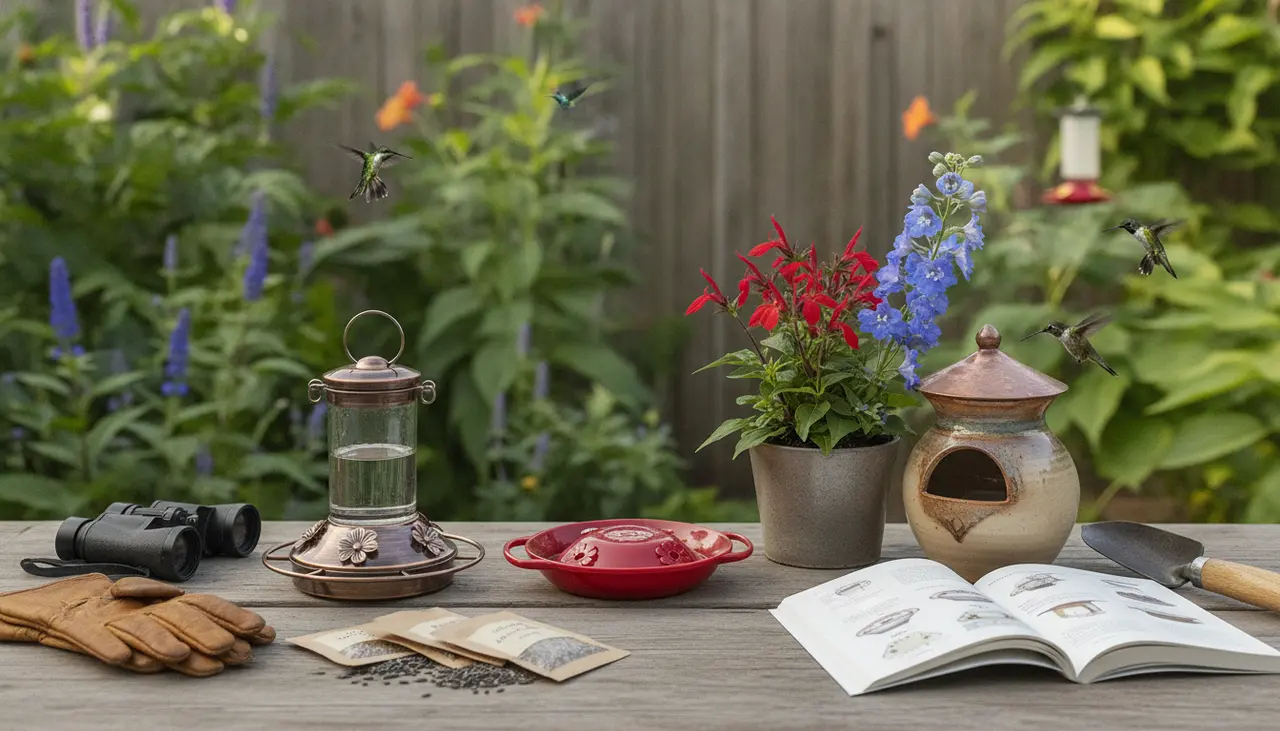
The Hummingbird Heart Master Buying Guide
Affiliate Disclosure: This guide contains affiliate links. If you purchase through these links, we may earn a small commission at no extra cost to you. This helps support our mission to provide heart-led advice for hummingbird enthusiasts.
To successfully attract and maintain a hummingbird habitat, you need high-quality gear that prioritizes bird safety and ease of maintenance. The most effective approach combines easy-to-clean glass feeders with built-in ant moats and a strategic selection of native pollinator plants to provide a natural food source. Choosing gear that fits your specific schedule ensures that bird watching remains a peaceful hobby rather than a stressful chore.
Who This Guide Is For
If you are a hobbyist bird watcher or a backyard gardener, you know that the goal isn't just to see a bird—it’s to create a moment of peace in a busy day. This guide is for the person who wants to sip their morning coffee while watching a Ruby-throated Hummingbird hover by the window, but who also has a household to run and a schedule to manage. We focus on "low-friction" gear: items that are easy to clean, durable, and designed to support the health of the birds with minimal stress for you.
The Hummingbird Heart Decision Framework
When building your habitat, don't feel like you have to do everything at once. Start with one reliable feeder and a small patch of native flowers. As you grow your sanctuary, use these four pillars to guide your purchases:
- Ease of Cleaning: If a feeder is hard to take apart, it won't get cleaned as often as it should. Look for wide-mouth reservoirs.
- Material Safety: Prioritize glass and BPA-free plastics. Avoid feeders with small, intricate parts that can trap mold.
- Pest Management: Look for integrated ant moats and bee guards to keep the nectar for the birds.
- Observation Quality: Choose gear, like window mounts or high-clarity binoculars, that enhances your connection to the birds.
Comparing Feeder Designs
Choosing the right feeder depends on your environment and how much time you have for maintenance.
| Feature | Glass Reservoir Feeders | Plastic Basin/Saucer Feeders | Window-Mount Feeders |
|---|---|---|---|
| Durability | High; resists sun damage and clouding. | Moderate; lighter and shatterproof. | Moderate; depends on suction cups. |
| Cleaning Ease | Excellent if wide-mouth; harder if narrow. | Superior; usually just two pieces. | Excellent; usually small and simple. |
| Pest Resistance | Often requires external ant moats. | Often features built-in moats. | High; harder for crawling insects. |
| Best For | High-traffic yards and hot climates. | Beginners and busy schedules. | Close-up observation and small spaces. |
Finding the "Best Fit" For Your Backyard
The "Busy Parent" Choice: Easy-Clean Saucer Feeders
I know your mornings are a whirlwind, and the last thing you need is a 10-piece feeder that requires a bottle brush and a degree in engineering to clean. For those with a tight schedule, a high-quality plastic saucer feeder (like those from First Nature or specialized basin brands) is a lifesaver. These usually consist of a simple top and bottom that snap together, making the every-three-day cleaning cycle a breeze.
The "Migration Season" Heavy Hitter: Large Capacity Glass
During peak migration, you might find your feeders emptied in a single afternoon. For these high-traffic times, a large-capacity glass reservoir feeder (like the classic Perky-Pet models) is essential. Glass doesn't warp in the sun and keeps the nectar slightly cooler than thin plastic, which is vital when the heat is on.
The "Nature Connection" Specialist: Window Mounts
If you want that low-stress connection with nature, nothing beats a window-mount feeder. These bring the Anna's Hummingbird or Ruby-throated Hummingbird right to the glass. Look for models with strong, UV-resistant suction cups and a "perch" bar, which encourages the birds to sit and stay a while, giving you a better view.
Essential Habitat Maintenance Gear
Beyond the feeder, a true habitat requires a few "support" items to keep things running smoothly:
- Ant Moats: If your feeder doesn't have one built-in, an external ant moat is a must. You simply fill it with water, and it acts as a physical barrier that ants cannot cross.
- Nectar Heaters: For those in regions where hummingbirds stay through the winter, a specialized nectar heater can prevent the sucrose solution from freezing, providing a literal lifeline for the birds.
- Cleaning Brushes: Invest in a set of small, flexible brushes designed for bird feeders. They make reaching into the feeding ports much easier.
- Binoculars: For the hobbyist, a pair of 8x32 or 8x42 binoculars is the "sweet spot" for backyard birding. They provide enough magnification to see the iridescent feathers without being too heavy to hold steady.
Common Beginner Mistakes to Avoid
- The "Red Dye" Trap: Never buy nectar with red dye, and never add food coloring to your homemade nectar. The red color on the feeder itself is enough to attract them.
- Using the Wrong Sugar: Only use plain white granulated sugar (sucrose). Never use honey, brown sugar, or artificial sweeteners, as these can be fatal to hummingbirds.
- Neglecting the Heat: In the heat of summer, nectar can ferment in as little as 48 hours. If the nectar looks cloudy, it’s already gone bad.
- Ignoring Native Plants: Gear is only half the battle. A habitat without native plants is just a snack station. Balance your feeders with nectar-rich flowers native to your specific region.
The Hummingbird Heart Checklist
Before you checkout with your new gear, run through this quick checklist:
- [ ] Does the feeder come apart completely for cleaning?
- [ ] Is the reservoir glass or UV-stabilized plastic?
- [ ] Do I have a dedicated space to hang this that is out of direct, 100-degree sunlight?
- [ ] Do I have a plan for ant protection?
- [ ] Have I checked my local nursery for native plants to supplement the feeders?
Frequently Asked Questions
How often should I really clean my feeders? In mild weather, every 3-5 days. In temperatures over 90°F, you should clean and refill them every 2 days to prevent mold and fermentation.
What is the best nectar recipe? It's simple and cost-effective: 4 parts water to 1 part white granulated sugar. Boil the water to help the sugar dissolve, then let it cool completely before filling your feeders. For more details, you can refer to our Master Nectar Guide.
Will feeders make hummingbirds stop migrating? No. Migration is triggered by day length and hormonal changes, not by the availability of food. Keeping your feeders up helps them fuel their long journeys.
How do I stop bees from taking over? Look for feeders with "Bee Guards" (small cages over the ports) or saucer-style feeders where the nectar level is too low for bees to reach with their shorter tongues.
Growing Your Sanctuary
Building a hummingbird habitat is a journey, not a weekend project. By choosing high-quality gear now, you are setting yourself up for years of peaceful observation. For more information on creating a complete ecosystem, be sure to explore our resources on Garden Planting to find the best flowers for your specific hardiness zone.
Remember, the goal is a peaceful connection with nature. Start small, choose quality over quantity, and enjoy the magic of these tiny visitors.