
The Ultimate 4:1 Hummingbird Nectar Recipe: A Safe, Simple Guide for Busy Gardeners
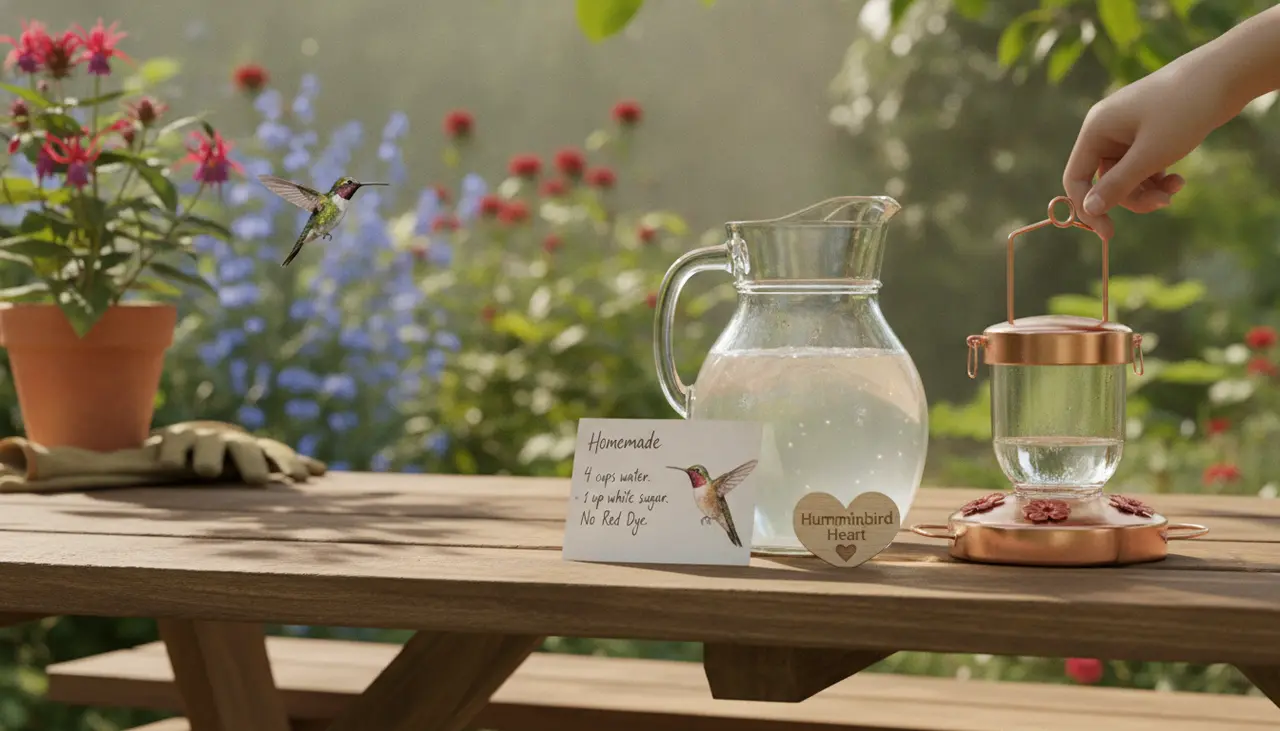
The safest and most effective hummingbird nectar recipe is a simple 4:1 ratio: four parts water to one part white granulated sugar. This formula most closely mimics the natural sucrose found in flower nectar, providing the high-energy fuel these tiny birds need for their high-metabolic lifestyle.
To make it, simply stir one cup of sugar into four cups of warm water until dissolved. There is no need for red dye, honey, or artificial sweeteners, all of which can be harmful or even fatal to hummingbirds. If you are making a small batch for immediate use, tap water is generally fine, but boiling the water first can help remove impurities and extend the shelf life of the nectar in your refrigerator.
Why Make Your Own Nectar?
I know how it goes—between school drop-offs, work meetings, and trying to keep the house from descending into chaos, grabbing a pre-mixed bottle of red nectar at the grocery store feels like the "easy" win. But as someone who has spent years watching these "flying jewels" from my kitchen window, I’ve learned that the DIY route is actually the ultimate time-saver (and life-saver for the birds).
This guide is for the backyard enthusiast who wants to provide the very best care for their local Ruby-throated or Anna’s hummingbirds without adding another complex chore to the weekly to-do list. We’re focusing on a "heart-led" approach: keeping it simple, safe, and sustainable.
The Simple 4:1 Nectar Recipe
If you can boil water, you can support a thriving pollinator habitat. Here is the step-by-step method I use every Sunday evening to prep for the week ahead.
Ingredients:
- 1 cup White Granulated Sugar: (Pure cane sugar is best).
- 4 cups Water: (Filtered or tap).
Instructions:
- Mix: Combine the sugar and water in a clean pot or glass mixing pitcher.
- Heat (Optional but Recommended): Bring the mixture to a low boil. This isn't strictly necessary for the birds' health, but it helps the sugar dissolve faster and kills any bacteria or mold spores in the water, helping the nectar stay fresh longer in the heat.
- Cool: Let the nectar reach room temperature. Never put hot nectar into a feeder, as it can warp plastic or crack glass.
- Fill: Pour the nectar into a clean feeder. If you’re looking for a new one, check out our guide on the /articles/best-glass-hummingbird-feeders-for-easy-cleaning-a-busy-homeowner-s-guide to make maintenance even faster.
- Store: Keep any extra nectar in a sealed container in the fridge for up to 7–10 days.
Safe Sugar Brands for Your Kitchen
Not all sugar is created equal when it comes to avian health. Stick to plain, white granulated sugar.
- Recommended: Domino Pure Cane Sugar, C&H Cane Sugar, or store-brand white granulated sugar.
- Avoid: Organic sugar (often contains too much iron), brown sugar (contains molasses), honey (promotes fungal growth), and any sugar substitutes like Stevia or Splenda (no nutritional value for birds).
Comparison: Homemade Nectar vs. Store-Bought Mixes
| Feature | Homemade 4:1 Nectar | Store-Bought Red Liquid | Powdered Mixes |
|---|---|---|---|
| Cost | Pennies per batch | Expensive ($5-$10/bottle) | Moderate |
| Safety | High (No additives) | Low (Contains dyes/preservatives) | Variable (Check labels) |
| Preparation | 5 minutes | 0 minutes | 2 minutes |
| Bird Health | Mimics natural flowers | Potential for toxicity | Risk of improper mixing |
Essential Gear for the Nectar Kitchen
Disclosure: This post contains affiliate links. If you purchase through these links, we may earn a small commission at no extra cost to you.
To make this hobby truly "low-stress," I recommend having a dedicated set of tools. It prevents the "where is my measuring cup?" scramble when you’re trying to get out the door.
- Airtight Sugar Storage: A dedicated 5lb or 10lb BPA-free storage container keeps your nectar sugar fresh and prevents ants from finding it in your pantry.
- Glass Mixing Pitchers: I love using a 1-quart glass batter bowl or pitcher with a spout. It makes pouring into narrow-neck feeders so much cleaner—no more sticky counters!
- Cleaning Brushes: Even the best recipe won't help if the feeder is dirty. A set of micro-brushes is essential for getting into those tiny feeding ports.
Common Beginner Mistakes to Avoid
We’ve all been there—trying to do the right thing but missing a crucial detail. Avoid these common pitfalls to keep your backyard sanctuary safe:
- Using Red Dye: Hummingbirds are attracted to the red color of the feeder, not the nectar itself. Red dye (Red #40) is unnecessary and potentially harmful to their kidneys.
- Leaving Nectar Too Long: In the heat of summer, nectar can ferment in as little as 2 days. If it looks cloudy or has black spots (mold), it’s time to dump, scrub, and refill.
- Wrong Ratios: Don't be tempted to make the nectar "stronger" (like a 2:1 ratio) during cold snaps without expert advice. Stick to 4:1 to ensure they stay hydrated.
- Hanging in Full Sun: If possible, hang your feeder in a spot that gets morning sun but afternoon shade. This prevents the nectar from "cooking" and fermenting prematurely.
Frequently Asked Questions
Do I really need to boil the water? If you use the nectar immediately and your tap water is high-quality, you don't have to boil it. However, boiling for 1-2 minutes is the "gold standard" for safety and shelf life.
How often should I clean my feeder? In mild weather, every 3-5 days. In temperatures over 90°F, every 2 days is best. For more tips on choosing gear that makes this chore easier, see /articles/the-hummingbird-heart-master-buying-guide.
Can I use honey if I run out of sugar? No. Honey ferments very quickly and can cause a fatal fungal infection in a hummingbird's tongue. If you're out of sugar, it's better to leave the feeder empty for a day while you run to the store.
What if the birds aren't coming to my new nectar? Be patient! It can take a few days for scouts to find a new source. Ensure your feeder has red accents and is placed near "landing pads" like small trees or shrubs where they feel safe.
Connecting with nature shouldn't feel like another item on your "to-do" list. By keeping a pitcher of this simple 4:1 nectar in your fridge, you’re always just thirty seconds away from a front-row seat to one of nature’s most magical shows. Happy birding!