
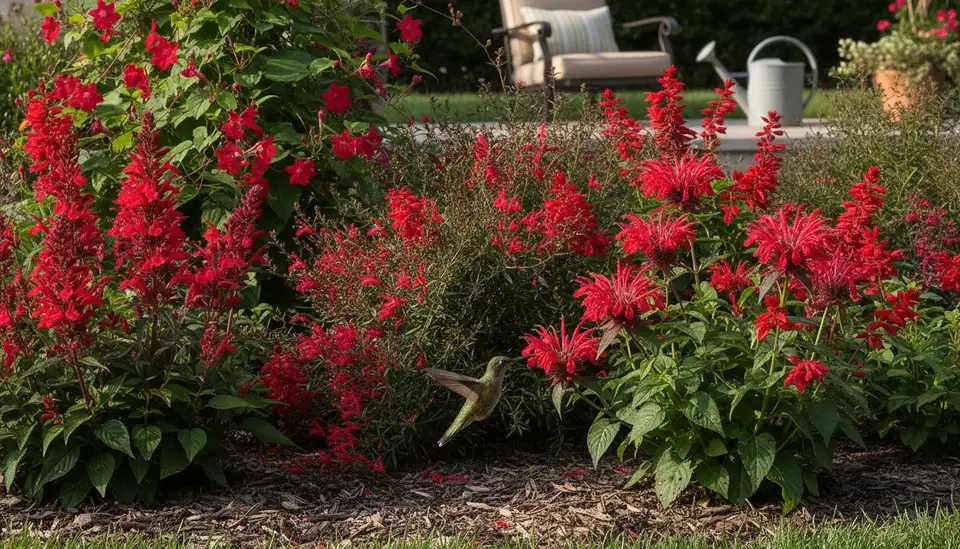
Top 5 Red Flowers for a Hummingbird Garden: Low-Maintenance Plants for Busy Homeowners
Disclosure: This post contains affiliate links. If you make a purchase through these links, we may earn a commission at no extra cost to you. We only recommend tools and nurseries that support safe, healthy habitats for our feathered friends.
If you want to attract more hummingbirds to your yard this spring, the most effective strategy is to plant red, tubular flowers. Hummingbirds are naturally drawn to the color red because it often signals a high-energy nectar source. By choosing hardy, perennial varieties like Bee Balm, Cardinal Flower, and Trumpet Honeysuckle, you can create a self-sustaining "buffet" that keeps birds coming back year after year with very little effort on your part.
The Busy Gardener’s Guide to Hummingbird Plants
This guide is designed specifically for the hobbyist who loves the sight of a Ruby-throated or Anna’s Hummingbird darting through the garden but doesn’t have hours to spend on pruning and fertilizing. We know your mornings are a whirlwind of coffee, kids, and commutes—you want a garden that works for you, not the other way around.
By focusing on these specific hummingbird garden plants, you can provide a natural nectar source that supplements your feeders, ensuring your backyard remains a priority stop on their migration route.
Comparison of Top Low-Maintenance Red Flowers
| Plant Name | Light Needs | Bloom Season | Best Use Case |
|---|---|---|---|
| Bee Balm | Full Sun to Partial Shade | Summer | Filling large gaps in flower beds |
| Cardinal Flower | Partial Shade to Sun | Late Summer | Damp areas or near water features |
| Trumpet Honeysuckle | Full Sun | Spring - Summer | Covering fences or trellises |
| Scarlet Sage | Full Sun | Summer - Frost | Quick color in patio containers |
| Coral Bells | Partial Shade | Late Spring | Edging paths or shady corners |
1. Bee Balm (Monarda didyma)
Best for: Filling large spaces with vibrant color.
Bee Balm is a powerhouse in any pollinator garden. It produces shaggy, bright red blooms that hummingbirds absolutely adore.
- The Tradeoff: It can spread quickly. This is great if you want to fill a large area for "free," but you may need to thin it out every few years.
- Pro-Tip: Look for "mildew-resistant" varieties at your local nursery to keep the foliage looking clean during humid summers.
2. Cardinal Flower (Lobelia cardinalis)
Best for: Wet spots where other plants fail.
If you have a corner of your yard that stays a bit soggy after a rain, the Cardinal Flower is your best friend. Its deep, true-red spikes are a magnet for hummingbirds.
- Pros: Extremely intense red color; native to much of North America.
- Cons: It is a short-lived perennial, meaning it may need to re-seed itself to stay in your garden long-term.
3. Trumpet Honeysuckle (Lonicera sempervirens)
Best for: Vertical interest and privacy.
Not to be confused with the invasive Japanese variety, our native Trumpet Honeysuckle is a well-behaved vine. It’s perfect for growing up a mailbox or a backyard fence.
- Why it works: The long, tubular flowers are perfectly shaped for a hummingbird’s beak.
- Maintenance: Once established, it requires very little water. Just a quick prune once a year to keep it in shape is all it takes.
4. Scarlet Sage (Salvia coccinea)
Best for: Instant gratification in pots.
If you’re short on ground space, Scarlet Sage is an easy win. You can find these at almost any garden center in the spring.
- The Setup: Place a few pots of Scarlet Sage right next to your favorite window. This brings the hummingbirds close enough for photography without you having to leave your porch.
- Care: It’s very drought-tolerant, making it perfect for the parent who might occasionally forget to water the planters.
5. Coral Bells (Heuchera 'Firefly')
Best for: Adding color to shady spots.
Most red flowers need full sun, but Coral Bells (specifically the 'Firefly' or red-blooming varieties) thrive in the shade.
- Pros: The foliage stays beautiful all season, even when the flowers aren't blooming.
- Cons: The flowers are small, so you’ll want to plant them in clusters to make sure the hummingbirds spot them.
Common Beginner Mistakes to Avoid
- Using Pesticides: Hummingbirds eat tiny insects (like gnats and spiders) for protein. Using broad-spectrum pesticides can kill their food source and potentially harm the birds.
- Neglecting the Nectar: While plants are vital, feeders help bridge the gap during dry spells. If you're supplementing your garden with a feeder, make sure you're using The Ultimate 4:1 Hummingbird Nectar Recipe: A Safe, Simple Guide for Busy Gardeners to keep them healthy.
- Planting Invasive Species: Always check that your "Trumpet Vine" or "Honeysuckle" is the native variety. Invasive species can take over your yard and provide lower-quality nectar.
Essential Gear for Your Hummingbird Garden
To get the most out of your new plants, a few simple tools can make the job easier:
- Ergonomic Trowels: Look for gel-grip handles to make planting easier on your wrists.
- Soaker Hoses: These are a lifesaver for busy homeowners; they deliver water directly to the roots while you’re inside managing the household.
- Quality Feeders: Placing a feeder near your new flowers creates a "target zone" for birds. For recommendations on easy-to-clean options, check out The Hummingbird Heart Master Buying Guide.
Frequently Asked Questions
When is the best time to plant hummingbird flowers? Late spring, after the danger of frost has passed, is ideal for most perennials. This gives the roots time to establish before the heat of summer.
Do I need to use red mulch or decorations? While red accents can help catch a bird's eye from a distance, the flowers themselves are the best attractant. Natural mulch is better for the health of your soil and plants.
How many plants do I need to see results? Even a single pot of Scarlet Sage can attract a curious hummingbird, but planting in "drifts" or clusters of 3-5 plants makes it much easier for birds to find your garden while flying overhead.
Will these plants attract bees too? Yes, most hummingbird-friendly plants are also great for bees and butterflies. If you are worried about bees near your seating area, place the Bee Balm and Cardinal Flower toward the back of your garden beds.