
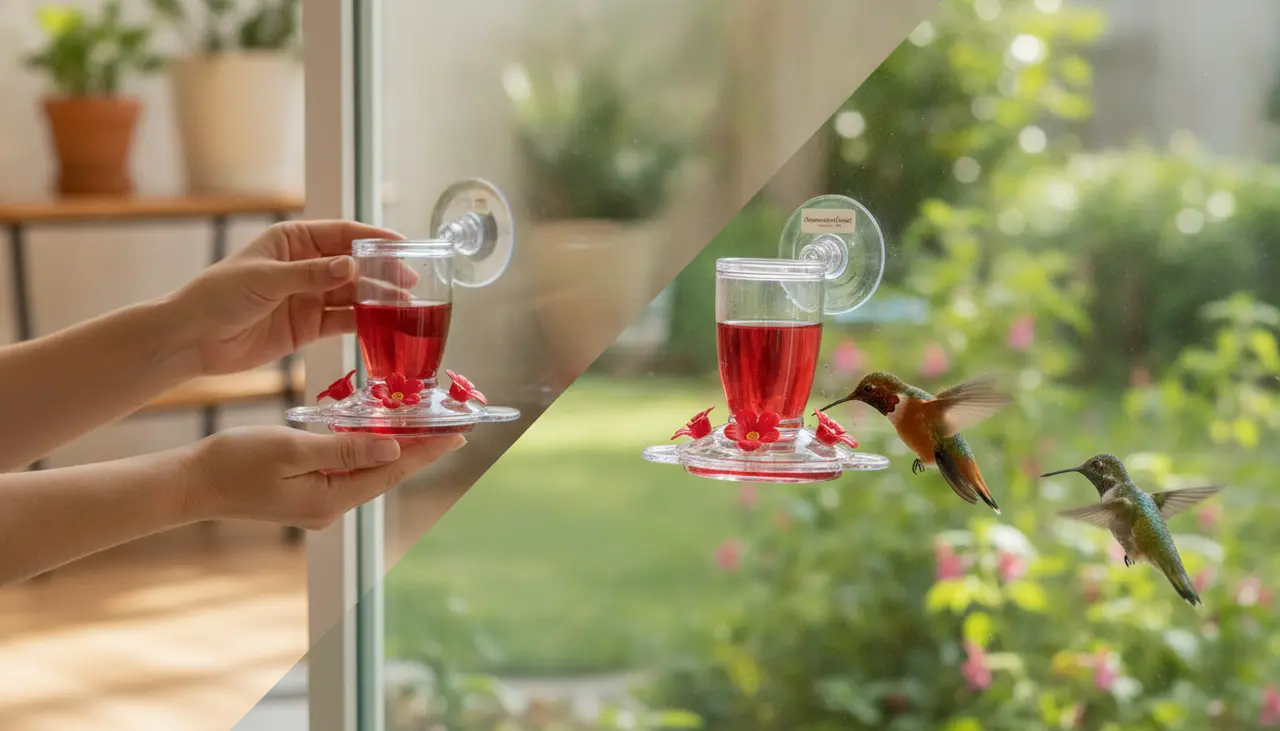
Window Feeders: Will Birds Actually Use Them? The Pros and Cons of Up-Close Magic
If you’ve ever sat at your kitchen table with a lukewarm cup of coffee, watching a tiny glimmer of green zip across the yard, you’ve probably wondered: What if I could bring them even closer?
The idea of a window hummingbird feeder is enchanting. Imagine your kids’ faces when a Ruby-throated Hummingbird hovers just inches away while they’re eating breakfast. But if you’re like most of us managing a busy household, you don't want to waste money on a gadget that the birds will simply ignore—or worse, one that might be unsafe for them.
The Short Answer: Will Birds Actually Use Them?
Yes, hummingbirds will absolutely use window feeders. In fact, because hummingbirds are naturally curious and highly motivated by high-quality nectar, they often become quite bold once they realize a window-mounted feeder is a reliable food source.
While it may take anywhere from a few days to two weeks for them to "trust" the new location, window feeders are often among the most popular spots in a backyard habitat. The key to success lies in proper placement, maintaining clean nectar, and ensuring the birds feel safe from predators while they dine.
Why Consider a Window Hummingbird Feeder?
For the busy parent or the homeowner who works from a home office, a window feeder offers a "micro-moment" of peace. You don’t have to trek out to the back of the garden with binoculars to enjoy the view. It’s bird watching made accessible for a hectic schedule.
Before you buy, it’s helpful to understand how these feeders differ from the traditional hanging models you might find in The Hummingbird Heart Master Buying Guide.
Window vs. Traditional Feeders: At a Glance
| Feature | Window-Mount Feeder | Traditional Hanging Feeder |
|---|---|---|
| View Quality | Exceptional (Inches away) | Variable (Depends on distance) |
| Installation | Suction cups or brackets | Hooks, poles, or tree branches |
| Refilling | Very easy (Right at the window) | Requires walking into the garden |
| Pest Control | Easier to monitor for ants | Requires dedicated ant moats |
| Bird Safety | Requires window decals to prevent strikes | Generally lower strike risk |
Finding the Right Fit: Which Style is Best for You?
Not all window feeders are created equal. Depending on your window type and how much time you have for maintenance, you’ll want to choose carefully.
Best for Maximum Visibility: Clear Acrylic Basin Feeders
These are usually rectangular boxes that stick directly to the glass. Because they are completely clear, you get an unobstructed view of the bird’s tongue as it drinks. These are fantastic for kids who are learning about nature.
Best for Easy Maintenance: Top-Fill Suction Feeders
If your mornings are a whirlwind, you need something that doesn’t require a 10-step disassembly. Look for top-fill designs that allow you to pour in fresh nectar without even removing the feeder from the window. For more tips on low-stress maintenance, check out our guide on the Best Glass Hummingbird Feeders for Easy Cleaning: A Busy Homeowner’s Guide.
Best for Multi-Bird Families: High-Capacity Bracket Mounts
If you live in a high-traffic migration route, a tiny 4-ounce reservoir won't cut it. Some window feeders use a metal bracket that screws into the window frame, holding a larger glass bottle.
The Pros and Cons: A Realistic Look
The Pros:
- Unbeatable Views: You can see the iridescent feathers and tiny movements that are invisible from a distance.
- Accessibility: Perfect for those with limited mobility or small outdoor spaces like apartments and condos.
- Safety from Predators: Being tucked against a house can sometimes protect hummers from hawks that prefer open-sky diving paths.
The Cons:
- Suction Cup Failure: Temperature swings can cause suction cups to lose their grip. (Pro-tip: Clean the window with rubbing alcohol before applying!)
- Window Strikes: If a bird gets startled, it might fly into the glass.
- Nectar Spills: If not leveled correctly, some models may drip, attracting ants to your window sill.
Beginner Mistakes to Avoid
- Using Red Dye: Never buy the red-dyed nectar or add food coloring. The red "flower" parts on the feeder are enough to attract them. Clear 1:4 sugar-to-water nectar is all they need.
- Neglecting the Glass: If your window is reflective, birds might fly into it. Use UV-reflective decals around the feeder to let them know the glass is there.
- Forgetting the Heat: Windows can trap heat. If your feeder is in direct afternoon sun, the nectar will ferment faster. Check it daily during summer months.
Frequently Asked Questions
How do I get them to find the window feeder? If they aren't finding it, try hanging a temporary red ribbon near the window or move a potted tubular flower (like Salvia) nearby to catch their eye.
Will the birds fly into my window? Actually, feeders placed directly on the glass are often safer than those placed 10 feet away. When the feeder is on the glass, the birds don't build up enough speed to hurt themselves if they do bump into it. However, adding window clings is always a smart safety measure.
How do I stop ants from reaching a window feeder? Many window feeders don't come with built-in moats. You can apply a small amount of "Ant Barrier" gel to the window or look for models specifically designed with a small water reservoir between the suction cups and the nectar.
Affiliate Disclosure: Hummingbird Heart is a participant in the Amazon Services LLC Associates Program and other niche affiliate programs. We may earn a small commission from qualifying purchases made through links in this post at no additional cost to you.