
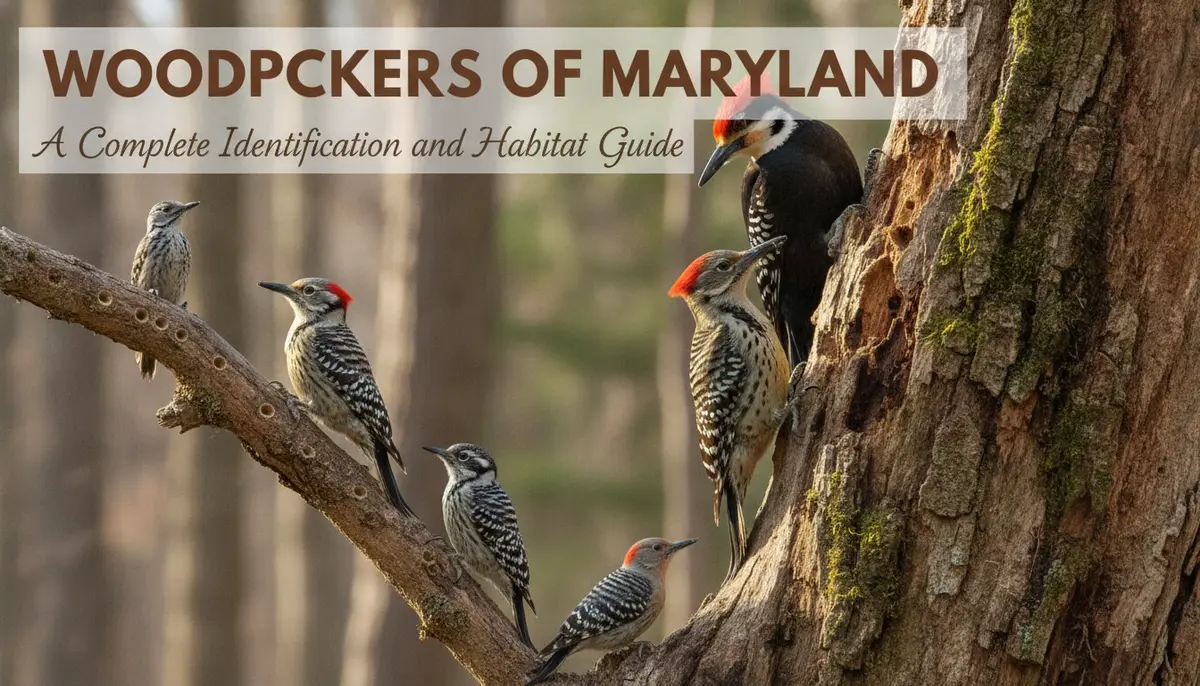
Woodpeckers of Maryland: A Complete Identification and Habitat Guide
Maryland holds a prestigious reputation as the fifth greenest state in the U.S., offering a diverse tapestry of ecosystems that range from the coastal plains of the Eastern Shore to the forested mountains of the west. This environmental richness makes the Old Line State a sanctuary for avian life, particularly for those in the family Picidae.
There are eight distinct species of woodpeckers in Maryland. These birds are more than just charismatic backyard visitors; they are "ecosystem engineers" that create nesting cavities used by dozens of other species. Whether you are a seasoned birder or a homeowner wondering what is making that rhythmic drumming sound in your oak tree, understanding these eight species is the key to appreciating Maryland’s vibrant woodlands.
The Giants of the Forest: The Pileated Woodpecker
The Pileated Woodpecker is the undisputed heavyweight of the Maryland woods. If you have ever seen a bird that looked like it flew straight out of a vintage cartoon, it was likely this one. Measuring nearly the size of a crow, the Pileated Woodpecker is the largest species in North America.
Identification and Behavior
The most striking feature of the Pileated Woodpecker is its flaming red triangular crest. Their bodies are primarily black with white stripes leading down the neck. In flight, they reveal massive white underwing patches that are visible from a great distance.
These birds are famous for the deep, rectangular holes they excavate in dead or dying trees. Unlike the small, round holes of other species, a Pileated’s excavation can be over a foot long as they hunt for their favorite meal: carpenter ants. If you hear a loud, echoing drumming that sounds like a hammer hitting a hollow log, or a wild, laughing call, look up—you likely have a Pileated nearby.
The Specialized Pine Dwellers: Red-Cockaded Woodpecker
Perhaps the most elusive of the eight species is the Red-Cockaded Woodpecker. This bird is a specialist, tied almost exclusively to mature pine forests.
A Unique Relationship with Fungus
The Red-Cockaded Woodpecker is known for its black and white plumage, featuring a black head and nape with prominent white cheek patches. While its name suggests a "cockade" (a ribbon or ornament), this red streak on the male’s cap is rarely visible in the field.
What makes this species truly fascinating is its reliance on the Red Heart Fungus. This fungus infects older pine trees, softening the wood from the inside out. This allows the woodpecker to drill nesting cavities into living trees—a feat most other woodpeckers cannot achieve. Their diet is equally tied to the pines, consisting of pine fruit and insects like cockroaches, spiders, and caterpillars found within the bark.
The Winter Visitor: Yellow-Bellied Sapsucker
While many woodpeckers are year-round residents, the Yellow-Bellied Sapsucker is a migratory guest in Maryland. You are most likely to spot these birds during the winter months or peak migration periods.
The Art of Sap Sucking
The Yellow-Bellied Sapsucker is roughly the size of a robin and features a red forehead and white stripes down the neck. Males are distinguished by their red throats. True to their name, these birds create "sap wells"—horizontal rows of small, shallow holes in tree bark.
Using specialized tongues with brush-like tips, they lap up the oozing sap and eat any insects that get stuck in the sticky residue. They favor specific trees, including:
- Yellow Birch
- Hickory
- Sugar or Red Maple
- Young Paper Birch
If you see a tree with perfectly straight, horizontal lines of tiny holes, you are looking at the handiwork of a sapsucker.
The Lookalikes: Hairy vs. Downy Woodpeckers
One of the most common challenges for Maryland birders is distinguishing between the Hairy Woodpecker and the Downy Woodpecker. They share nearly identical black-and-white checkered plumage patterns, but with a bit of practice, the differences become clear.
The Hairy Woodpecker
The Hairy Woodpecker is a medium-sized bird typically found in mature forests, but it also frequents Maryland’s suburban parks and even cemeteries. It has a large, chisel-like bill that is nearly as long as its head. Its calls are explosive and powerful, often described as a sharp "peek" or a whinnying sound.
The Downy Woodpecker
The Downy is the smaller cousin, often seen hanging upside down on slender branches or weed stalks that would never support the weight of a Hairy Woodpecker. The easiest way to tell them apart is the bill: the Downy’s bill is very short, appearing to be only about one-third the length of its head.
For those looking to get a better look at these details, using specialized equipment can help. Check out The Hummingbird Heart Master Buying Guide for tips on selecting optics that work for both hummingbirds and woodpeckers.
The Colorful Residents: Red-Bellied and Red-Headed Woodpeckers
Maryland also hosts two species that are often confused by name: the Red-Bellied and the Red-Headed Woodpecker.
Red-Bellied Woodpecker
The Red-Bellied Woodpecker is one of the most common sights at Maryland bird feeders. Ironically, their red belly is very faint and hard to see. Instead, look for their "Zebra-striped" back and the brilliant red wash that covers the back of the head and neck. They are highly adaptable and thrive in both deep forests and backyard settings.
Red-Headed Woodpecker
The Red-Headed Woodpecker is much more striking and, unfortunately, less common. Unlike the Red-Bellied, the Red-Headed Woodpecker has a solid, deep crimson head, neck, and throat. Their bodies are a bold pattern of black and white. They are known for their "fly-catching" behavior, often darting out from a perch to catch insects in mid-air.
The Ground-Feeder: Northern Flicker
The eighth species, the Northern Flicker, breaks many of the typical woodpecker rules. While most woodpeckers spend their time on trunks and branches, you will often find the Northern Flicker hopping around on the ground.
Identifying the Flicker
Flickers are brownish-tan with black scalloping and a prominent black "crescent" on the chest. In Maryland, we see the "Yellow-shafted" variety, which shows a brilliant flash of yellow under the wings and tail when they fly. Their primary diet consists of ants, which they extract from the soil using their long, barbed tongues.
How to Attract Woodpeckers to Your Maryland Yard
If you want to bring these fascinating birds closer to your windows, you need to provide the three essentials: food, water, and shelter.
- Suet Feeders: Most Maryland woodpeckers, especially the Downy, Hairy, and Red-Bellied, are suckers for high-quality suet. Look for blends containing peanuts, mealworms, or fruit.
- Water Sources: A heated bird bath is essential for keeping woodpeckers hydrated during Maryland’s freezing winters. For more on managing winter backyard needs, see our guide on Winter Care: Keeping Nectar from Freezing with a Hummingbird Feeder Heater.
- Leave the Snags: If it is safe to do so, leave dead trees (snags) standing on your property. These provide essential nesting sites and a natural larder of insects for woodpeckers.
- Window Placement: To see these birds up close, consider a window feeder. Many birders wonder, Window Feeders: Will Birds Actually Use Them? The answer is a resounding yes, provided they are placed near cover.
Conservation and the Future of Maryland's Woodpeckers
While species like the Downy and Red-Bellied Woodpecker are thriving, others like the Red-Cockaded Woodpecker face significant habitat challenges. The loss of mature pine forests and the suppression of natural fire cycles have made the Red-Cockaded a rare sight.
By maintaining native plants and reducing pesticide use, Maryland residents can ensure that these eight species continue to drum, drum, drum for generations to come. Whether it's the cat-like mewing of the Hairy Woodpecker or the staccato drumming of the Sapsucker, these birds are a vital part of the state's natural heritage.