
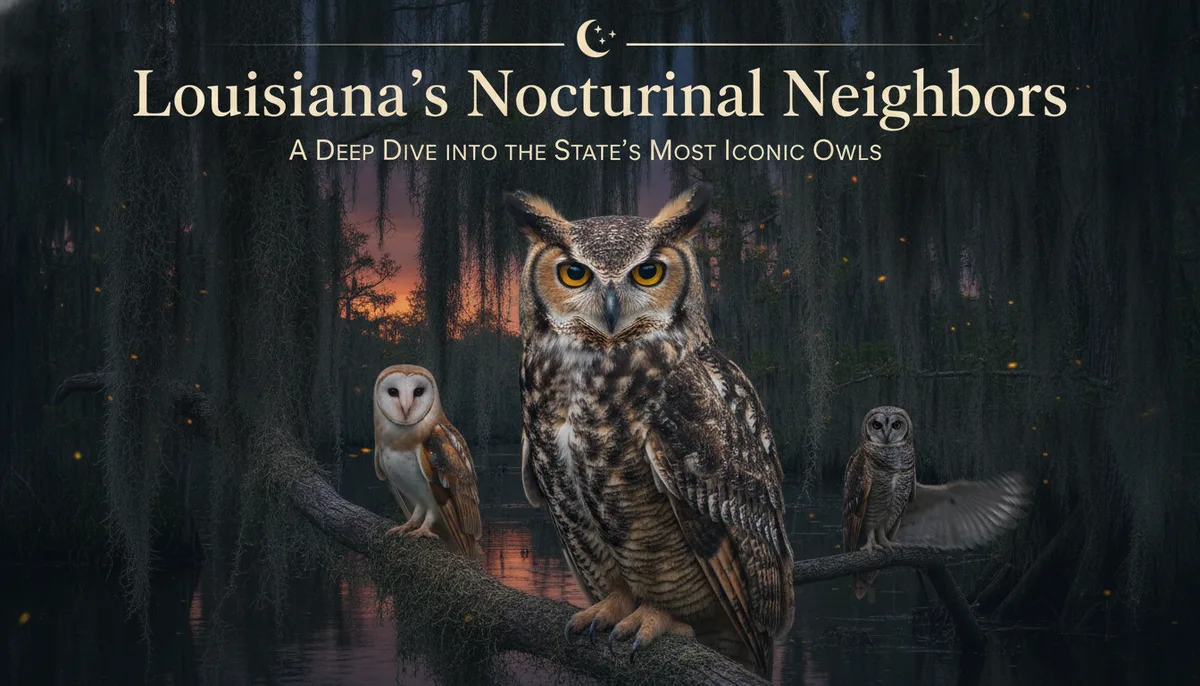
Louisiana’s Nocturnal Neighbors: A Deep Dive into the State’s Most Iconic Owls
Louisiana is a land defined by its rhythm—from the soulful notes of Jazz in New Orleans to the slow, steady pulse of life in the Atchafalaya Basin. While the state is famous for its Creole and Cajun culinary heritage, nature enthusiasts know it as a premier destination for avian diversity. With over 485 bird species recorded in the state, the "Pelican State" offers a rich tapestry of habitats ranging from coastal marshes to dense pine forests.
Among the most captivating of these residents are the owls. These silent hunters of the night play a vital role in Louisiana’s ecosystem, keeping rodent populations in check and serving as indicators of environmental health. Whether you are trekking through a cypress swamp or simply sitting on your back porch in Baton Rouge, understanding the behavior and habitats of these birds can transform a standard evening into an extraordinary birding expedition.
The Great Horned Owl: The Tiger of the Bayou
The Great Horned Owl (Bubo virginianus) is perhaps the most iconic owl in North America, and it maintains a strong presence across Louisiana. Often referred to as the "Tiger Owl," this raptor is known for its sheer power and its distinctive ear tufts that resemble horns.
Habitat and Adaptability
What makes the Great Horned Owl so successful in Louisiana is its incredible adaptability. While many species are specialists, the Great Horned Owl is a generalist. You can find them in the state’s sprawling swamps, evergreen forests, and even deciduous woodlands. It is not uncommon to spot them near residential areas where mature trees provide both cover and a vantage point for hunting.
Hunting Prowess
This owl boasts the most diverse diet of any North American owl. In Louisiana, they are known to target prey significantly larger than themselves, including other owls, hawks, and falcons. Because they hunt primarily at dawn and dusk—and occasionally deep into the night—their vision and hearing are finely tuned to detect the slightest movement in the undergrowth.
If you are looking to observe these magnificent birds, keep an eye on abandoned nests. Great Horned Owls rarely build their own homes; instead, they take over nests previously used by hawks or other large birds. They have also been known to occupy tree cavities or man-made structures.
high-powered birding binoculars for low light
The Barred Owl: The Voice of the Wetlands
If you hear a rhythmic hooting that sounds like "Who cooks for you? Who cooks for you all?", you are likely in the presence of a Barred Owl (Strix varia). This species is a staple of the Louisiana landscape, particularly in areas like Baton Rouge and the surrounding wetlands.
Identification and Appearance
The Barred Owl is named for the characteristic horizontal "bars" of brown and white on its chest and the vertical streaks on its belly. Their dark, soulful eyes lack the yellow irises found in many other owl species, giving them a gentler appearance despite their status as efficient predators.
Preferred Environments
Barred Owls are deeply tied to water. They thrive in large, mature forests near swamps and wetlands. Louisiana’s geography, dominated by bayous and floodplains, provides the perfect hunting ground for their preferred diet of small mammals, amphibians, and reptiles. Unlike the Great Horned Owl, which may venture into more open spaces, the Barred Owl prefers the deep, shaded canopy of the forest, making them a common sight for those who venture into the state's park systems.
The Eastern Screech-Owl: A Suburban Success Story
For many Louisiana residents, the Eastern Screech-Owl (Megascops asio) is the most likely owl to be encountered in a backyard setting. These small, stocky owls are remarkably comfortable around humans and have adapted well to suburban parks and residential neighborhoods.
The Two Faces of the Screech-Owl
In Louisiana, you may see Eastern Screech-Owls in two distinct color "morphs": gray and red. This plumage provides essential camouflage, allowing them to blend seamlessly into the bark of the trees they inhabit. During the day, they often sit perfectly still in tree cavities, nearly invisible to the untrained eye.
Attracting Them to Your Yard
Because they are less shy than their larger cousins, you can often encourage a breeding pair to take up residence in your yard by installing a nesting box. However, timing is everything; these boxes should be set up well before the breeding season begins.
It is important to note that if you have a thriving population of songbirds, they may not welcome their new neighbor. Songbirds often engage in "mobbing" behavior, where they gather in groups to dive-bomb and chirp loudly at an owl to force it to leave the area. This natural conflict is a fascinating display of avian behavior. For more on managing the dynamics of backyard birds, you might find our guide on Why Hummingbirds Fight: Managing Feeder Aggression helpful in understanding bird territoriality.
The Flammulated Owl: The Master of Camouflage
The Flammulated Owl (Psiloscops flammeolus) is one of the more mysterious species to visit Louisiana. While not as common as the Barred or Great Horned Owl, these tiny birds are occasionally spotted in city parks during their migratory journeys.
Exceptional Camouflage
The word "flammulated" refers to the flame-like markings on its feathers. Their plumage is a complex mix of brown, gray, rust, and white, which allows them to disappear against tree bark. Even if you are standing just a few feet away, a Flammulated Owl can be nearly impossible to detect. To make matters more difficult for birders, their hoot is surprisingly low in pitch for such a small bird, often making them sound much further away than they actually are.
An Insectivore’s Life
Unlike the larger raptors that hunt rodents, the Flammulated Owl is primarily an insectivore. They forage at the tops of trees, using their keen vision to snatch moths, crickets, beetles, and grasshoppers right out of the air. Before the female lays her eggs, the male will perform a courtship ritual of bringing her an abundance of food, ensuring she is healthy and strong for the nesting period.
Tips for Successful Owl Watching in Louisiana
Spotting an owl requires patience, timing, and a bit of luck. Because these birds are masters of concealment, you have to look for clues rather than the birds themselves.
- Listen Before You Look: Most birders find owls with their ears first. Familiarize yourself with the calls of the "Big Three" (Great Horned, Barred, and Screech).
- Check the "White Wash": Look at the base of large trees for white droppings or "pellets" (regurgitated bits of bone and fur). This is a sure sign that an owl has a favorite roosting spot nearby.
- Dawn and Dusk are Key: The transition hours between day and night are the most active times for owls. Use a high-quality pair of binoculars to scan the edges of forests and fields during these times.
- Respect the Space: Owls are sensitive to disturbance, especially during nesting season. Never use flash photography and keep a respectful distance.
If you enjoy watching birds from the comfort of your home, you might wonder if other species are as bold as the Screech-Owl. Our article on Window Feeders: Will Birds Actually Use Them? explores the pros and cons of bringing wildlife right to your glass.
Conservation and the Future of Louisiana’s Owls
The health of Louisiana’s owl populations is intrinsically linked to the preservation of its wetlands and forests. As urban sprawl continues, the loss of mature trees and nesting cavities poses a challenge for these birds. By maintaining old-growth trees on private property and participating in local conservation efforts, residents can help ensure that the "Who cooks for you?" of the Barred Owl remains a staple sound of the Louisiana night.
Whether you are an experienced "lister" or a casual nature lover, the owls of Louisiana offer a glimpse into a world that exists just out of sight. Their presence adds a layer of mystery and majesty to the state's natural heritage, reminding us that there is always more to discover if we are willing to look—and listen—closely.