
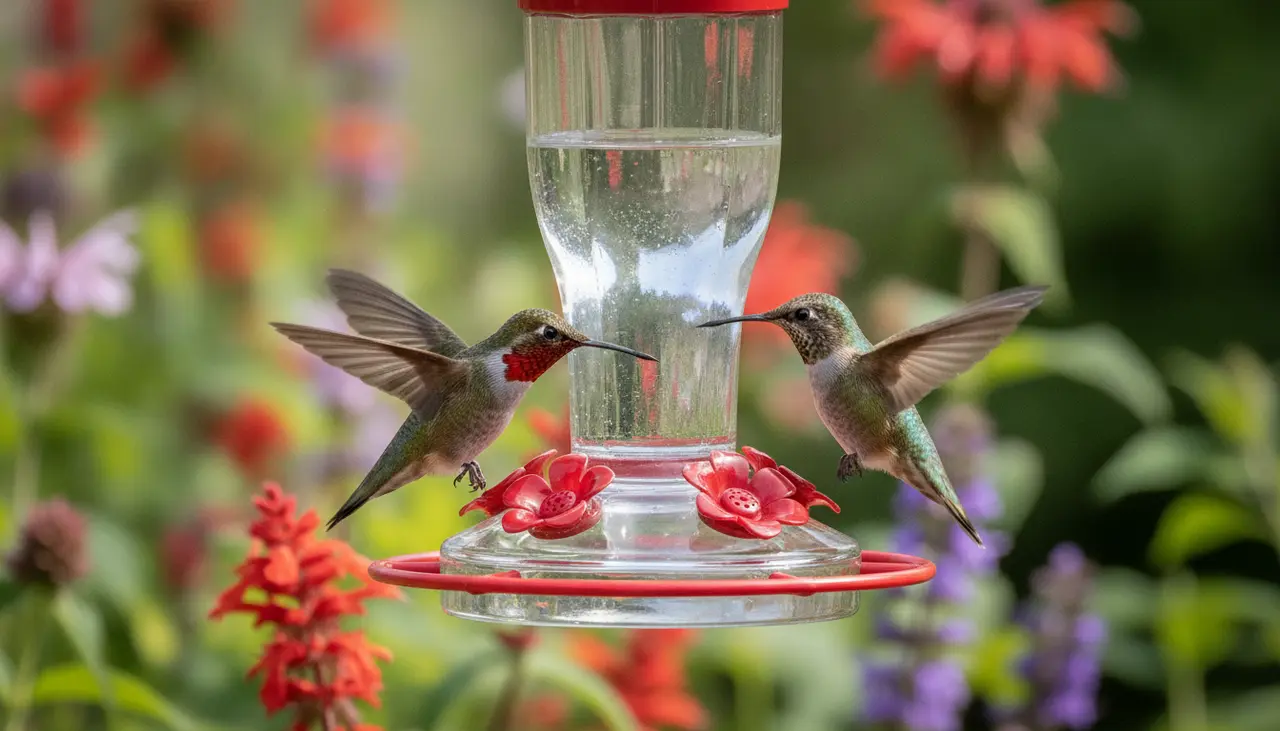
Why Hummingbirds Fight: Managing Feeder Aggression
Affiliate Disclosure: This post contains affiliate links. If you purchase through these links, we may earn a small commission at no extra cost to you, helping us keep the nectar flowing at Hummingbird Heart.
Why Are My Hummingbirds Fighting?
Hummingbirds fight because they are biologically programmed to protect high-value food sources. In the wild, a patch of nectar-rich flowers is a matter of life and death. When you hang a feeder, a dominant bird (often a male Ruby-throated or Anna’s) views that feeder as his personal territory. He isn't being "mean"; he is simply ensuring he has enough fuel to survive the night and the next leg of his migration.
To manage hummingbird aggression, you must break the "line of sight" between birds. By adding more feeders out of view from one another and supplementing with native plants, you can transition your backyard from a single-bird stronghold into a communal feeding station.
The "Bully" in the Backyard: Who This Guide Is For
I know exactly how it feels. You finally get your feeders cleaned and filled, you sit down for a rare five minutes of peace with your coffee, and instead of a serene nature moment, you’re watching a tiny, feathered fighter jet chase everyone else away. It can feel a bit heartbreaking to see the "little guys" get bullied.
This guide is for the busy homeowner who wants a lively, bird-filled yard without the stress of constant conflict. Whether you are a parent trying to show your kids the beauty of nature or a gardener looking to support local pollinators, these steps will help you manage the "drama" with minimal extra work.
Comparison: Managing Feeder Layouts for Peace
| Strategy | Best For | Effort Level | Effectiveness |
|---|---|---|---|
| The Cluster Method | High-traffic migration peaks | Low | Medium (Birds may still bicker) |
| The Visual Barrier | Year-round resident birds | Medium | High (If they can't see it, they won't guard it) |
| The Garden Blend | Long-term habitat health | High (Planting) | Highest (Spreads birds across the yard) |
How to Restore Peace: A Step-by-Step Tutorial
If you have one "sheriff" bird ruling your single feeder with an iron beak, here is how to break his hold on the territory.
1. The Multi-Feeder Spread
The biggest mistake we make is hanging two feeders right next to each other. A dominant hummingbird can easily guard two feeders if he can see them both.
- The Fix: Move your second feeder to the other side of the house or around a corner. If the bully is busy guarding the front porch feeder, he won't even know there is a party happening on the back deck.
- Pro Tip: Use a mix of styles. If you are already using a hanging bottle, consider adding a few Window Feeders: Will Birds Actually Use Them? The Pros and Cons of Up-Close Magic to provide different "zones" for different birds.
2. Create Visual Barriers
Hummingbirds have incredible eyesight. If they can see a rival from their favorite perch, they will dive-bomb.
- The Fix: Use hanging baskets, large patio umbrellas, or trellis plants to block the view between feeding stations.
- Parent-to-Parent Tip: I know our schedules are packed, so don't feel like you need a landscape overhaul. Even moving a feeder behind a thick bush or a porch pillar makes a massive difference.
3. Supplement with "Natural Feeders"
Feeders are high-stakes because they provide a lot of sugar in one spot. Flowers, however, are harder to guard because the nectar is spread out.
- The Fix: Integrate native plants. Check out our guide on the /articles/top-5-red-flowers-for-a-hummingbird-garden-low-maintenance-plants-for-busy-homeowners to find easy-to-grow options that distract the bullies and feed the hungry.
Choosing the Right Gear to Reduce Conflict
When you're ready to expand your setup, quality matters. Cheap plastic feeders can leak, attracting bees that only add to the stress of your birds.
Best for High-Traffic Areas: Multi-Port Glass Feeders Glass reservoirs are easier to clean (a must for our busy schedules!) and often come with more ports. When five or six birds arrive at once during migration, a feeder with 6+ ports makes it harder for one bird to block them all. You can find our top recommendations for durable, easy-clean models in /articles/the-hummingbird-heart-master-buying-guide.
Best for "The Underdog": Small Capacity Window Feeders These are perfect for the shy birds who get chased away from the main "hub." Placing a small feeder on a quiet window allows less dominant birds to sneak a drink while the "bully" is distracted.
Common Beginner Mistakes
- Taking the feeder down: Some owners get so stressed by the fighting they remove the feeder. This actually hurts the birds, especially during migration. The fighting is natural; just give them more options!
- Grouping feeders together: As mentioned, "out of sight, out of mind" is the golden rule for hummingbird peace.
- Ignoring the species: Sometimes, the "bully" is just a specific species known for its feistiness. Learning to tell them apart can help you understand the dynamics. See our guide on /articles/identifying-common-backyard-hummingbirds-a-simple-guide-for-busy-families to spot the culprits.
FAQ: Managing the Drama
Q: Is the dominant bird hurting the others? A: Rarely. Most of the "fighting" is posturing—loud chirps, tail fanning, and high-speed chases. While they may occasionally poke with their beaks, they are usually just trying to scare the intruder away, not cause injury.
Q: Should I put out more feeders if I only see one bird? A: If you have one very aggressive bird, yes! Adding a second feeder out of sight is the fastest way to invite a second or third bird to your yard safely.
Q: Does the color of the feeder matter for aggression? A: Not necessarily. All hummingbirds are attracted to red, so a red feeder will attract both bullies and peaceful visitors alike. The key is the placement, not the color.
Summary Checklist for a Peaceful Yard
- [ ] Place at least two feeders in locations where they cannot see each other.
- [ ] Use "visual barriers" like porch posts or tall plants.
- [ ] Add native red flowers to provide "distraction" food sources.
- [ ] Keep feeders clean and full so the "resource" remains reliable.
- [ ] Relax! Remember that this behavior is a natural part of their wild lives.
By taking these small, manageable steps, you can turn your backyard back into the peaceful sanctuary you—and the birds—deserve. Happy birding!