
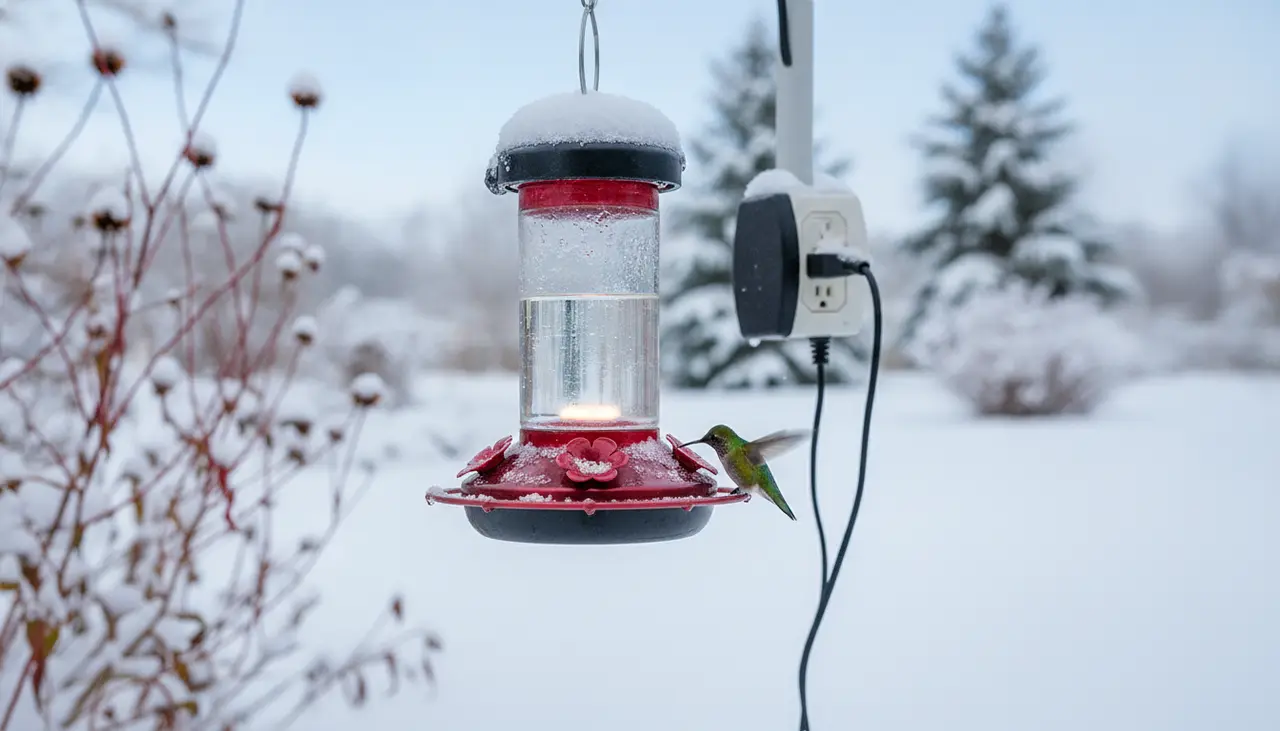
Winter Care: Keeping Nectar from Freezing with a Hummingbird Feeder Heater
Disclosure: This post contains affiliate links. If you click through and make a purchase, I may earn a small commission at no extra cost to you. As an Amazon Associate, I earn from qualifying purchases.
If you have ever looked out your kitchen window on a frosty morning—coffee in hand, kids finally settled with their breakfast—only to see a confused Anna’s Hummingbird hovering in front of a frozen block of ice, you know that pang of "bird-parent" guilt. We want to help these tiny, resilient creatures, but nature sometimes makes it a challenge.
To keep hummingbird nectar from freezing, the most effective and reliable solution is a hummingbird feeder heater. These simple devices attach to the bottom of your existing feeder and use a low-wattage bulb to provide just enough warmth to keep the sugar water liquid, even in sub-freezing temperatures. If a heater isn't an option, you can rotate two feeders throughout the day or move your feeder to a sheltered spot close to the house.
Who This Guide Is For
This guide is specifically for backyard enthusiasts living in regions where temperatures drop below 32°F (0°C). If you live in the Pacific Northwest or along the West Coast, you likely have year-round residents like the Anna’s Hummingbird. This guide is also for those in migration corridors who experience early autumn or late spring frosts. I know your mornings are a whirlwind, so this guide focuses on "set-it-and-forget-it" solutions that fit into a busy household schedule.
Choosing the Right Winter Solution
When the temperature dips, you have a few options to ensure your feathered friends stay fueled. Here is a quick look at how different methods stack up.
| Method | Best For | Pros | Cons |
|---|---|---|---|
| Clip-on Heater | Busy homeowners | Reliable, hands-off, fits most feeders | Requires outdoor power source |
| Feeder Rotation | Budget-conscious | No extra cost, very safe | High maintenance (must swap every few hours) |
| Incandescent Lights | DIY enthusiasts | Uses items you may already have | Can be unsightly, fire risk if not secured |
| Window Mounting | Close-up viewing | Uses home warmth, no extra gear | Only works during light frosts |
Why a Hummingbird Feeder Heater is a Game Changer
For most of us, the "Two-Feeder Swap" (bringing a frozen one in and putting a warm one out) is just one more chore we don't need. A dedicated hummingbird feeder heater is a small investment that offers massive peace of mind.
Most models, like those from popular niche brands, use a 7-watt or 15-watt incandescent bulb. They aren't designed to cook the nectar; they simply create a small pocket of warm air that prevents ice crystals from forming.
When shopping for a heater, look for:
- Universal Fit: Ensure it attaches easily to common brands like Perky-Pet or First Nature.
- Safety Features: Look for UL-listed cords and secure attachment points.
- Ease of Cleaning: Winter can still bring mold if you aren't careful, so choose a heater that is easy to wipe down.
Before you buy your winter gear, check out The Hummingbird Heart Master Buying Guide for our top recommendations on durable feeders that can withstand the expansion of freezing liquids without cracking.
Practical Tips for Cold-Weather Feeding
While a heater does the heavy lifting, these small adjustments can make your backyard a winter sanctuary:
- The "Shelter" Strategy: Hang your feeder in a spot protected from the wind. Wind chill speeds up the freezing process significantly. If you can, place it under a porch eave or near a window.
- Window Magic: Speaking of windows, using a window-mounted feeder can sometimes buy you a few extra degrees of warmth radiating from your home. For more on this, read our guide on Window Feeders: Will Birds Actually Use Them?.
- The Ultimate Nectar Recipe: In winter, some birders increase the sugar-to-water ratio slightly (from 1:4 to 1:3) to lower the freezing point. However, always consult a Master Nectar Guide before changing your recipe to ensure it remains safe and hydrating for the birds. Stick to plain white sucrose and never use honey or red dyes.
Common Beginner Mistakes to Avoid
- Using Hand Warmers: Taping chemical hand warmers to a feeder is a common "hack," but it’s unreliable, expensive over time, and creates a lot of waste.
- Neglecting Cleanliness: We often think "it's cold, so bacteria won't grow." While it grows slower, nectar still spoils. Check your feeder every few days for cloudiness.
- Bringing Feeders in at Night and Forgetting Them: If you bring your feeder in overnight to prevent freezing, you must have it back out before dawn. Hummingbirds need that first-light meal to recover from torpor (their nightly semi-hibernation).
- Using Red Dye: Never use red dye in your nectar. It is unnecessary and potentially harmful. If you want to attract birds in the winter, rely on the red accents on your feeder or plant winter-hardy red flowers. You can find ideas in our list of Top 5 Red Flowers for a Hummingbird Garden.
Frequently Asked Questions
Can I use a heater with a plastic feeder? Yes, most low-wattage heaters are designed specifically for plastic reservoirs. However, always ensure the bulb is not directly touching the plastic.
Do hummingbirds really stay in the cold? Yes! Anna’s Hummingbirds are famous for overwintering in cold climates. They survive by entering a state called torpor, where they lower their body temperature and heart rate to conserve energy.
What happens if my nectar freezes and a bird drinks it? Hummingbirds generally won't "drink" ice, but if the nectar is slushy and very cold, it can drop their body temperature dangerously fast. Keeping it at a liquid, "room temperature" state is ideal.
How do I keep ants out of the heater? Ants are usually less of a problem in the winter, but if you live in a transitional climate, make sure your heater doesn't interfere with your ant moat. You can learn more in our Parent’s Guide to a Bee-Proof Backyard.
Final Thoughts
Winter birding is incredibly rewarding. There is something so peaceful about watching a tiny spark of life thrive in the snow. By adding a simple hummingbird feeder heater to your setup, you take the stress out of the season and ensure your backyard visitors have a reliable energy source when they need it most.
Stay warm out there, and happy birding!