
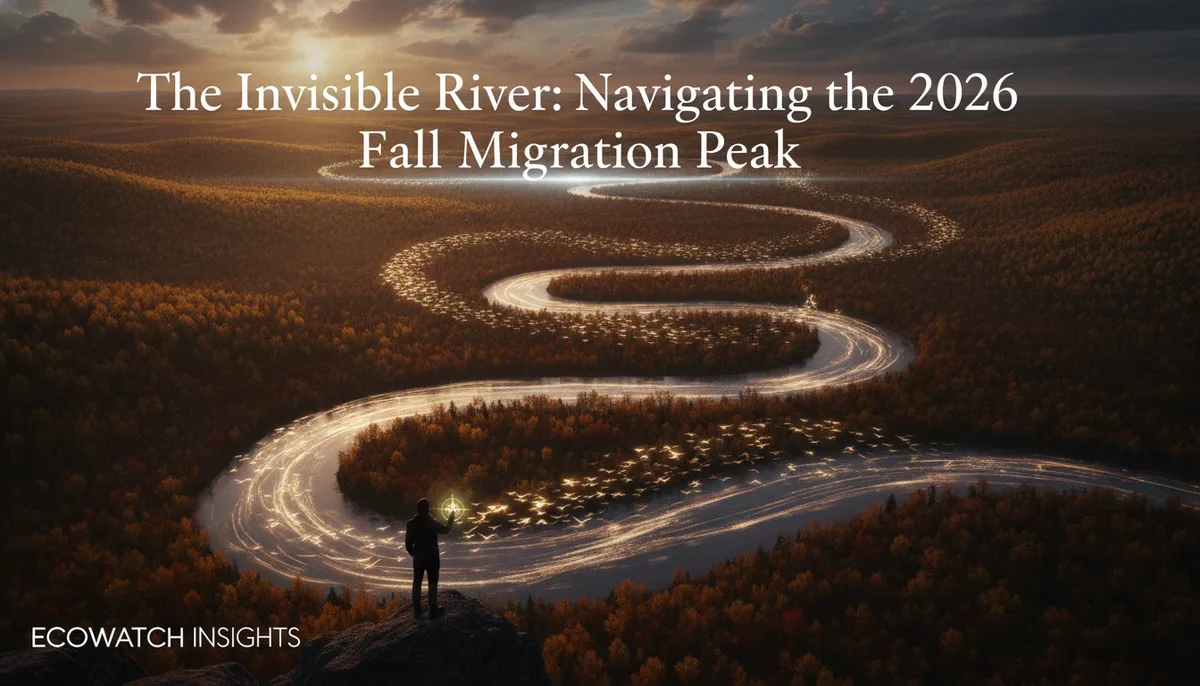
The Invisible River: Navigating the 2026 Fall Migration Peak
The Hidden Phenomenon Above Our Heads
As we settle into the evenings of August 2026, a silent and massive movement is taking place just a few thousand feet above our rooftops. While the world below sleeps, millions of birds are navigating the vast expanse of the North American continent. This isn't a scattered movement; it is a coordinated, instinctual journey that represents one of the most complex biological events on Earth.
According to data from BirdCast, over 80% of migratory bird species in North America choose the cover of darkness for their long-haul flights. If you were to look up tonight, the sky might appear empty, but weather surveillance radar tells a different story. These technological "eyes in the sky" reveal an invisible river of life flowing from northern breeding grounds toward the warmth of the south.
Understanding this nocturnal passage is more than just a scientific curiosity—it is a vital part of being a responsible bird enthusiast. Whether you are maintaining a backyard sanctuary or simply curious about the natural world, the 2026 migration season offers unprecedented insights into how these travelers survive their journey.
The Science of the Night: Why Birds Fly After Dark
For many, the idea of a tiny songbird or a hummingbird crossing hundreds of miles in total darkness seems impossible. However, migrating at night provides several distinct evolutionary advantages:
- Thermoregulation: Flying thousands of miles is an intense physical feat that generates significant body heat. The cooler nighttime air helps birds maintain a stable body temperature, preventing the dehydration and exhaustion that can occur under the blazing sun.
- Atmospheric Stability: The air is generally "smoother" at night. During the day, the sun heats the ground, causing rising thermals and turbulence. At night, the atmosphere settles, allowing birds to fly more efficiently with less buffeting.
- Predator Avoidance: Most hawks and other avian predators are diurnal (active during the day). By traveling under the cloak of night, smaller migrants significantly reduce their risk of being hunted mid-air.
The scale of this movement is staggering. In September 2025, radar technology recorded a milestone: over 1.2 billion birds were in flight during a single night. While not every night reaches these record-breaking heights, the mid-August through mid-November window consistently sees hundreds of millions of individuals on the wing.
high-quality bird binoculars for night viewing
Breakthroughs in 2026: Radar Meets Citizen Science
The year 2026 has marked a significant turning point in how we track and understand migration. Researchers from the Cornell Lab of Ornithology, the University of Massachusetts Amherst, and the University of Illinois have unveiled new methodology that bridges the gap between "dots on a radar" and specific species identification.
By integrating weather-radar data with over 2 billion bird observations submitted by citizen scientists through eBird, researchers can now estimate which individual species are responsible for the movements detected by radar. This means we are moving closer to knowing exactly when specific populations—such as our beloved hummingbirds—are passing through a particular corridor.
This research highlights the importance of the four major North American flyways:
- The Atlantic Flyway: Following the eastern coastline.
- The Mississippi Flyway: A massive corridor through the center of the continent.
- The Central Flyway: Traversing the Great Plains.
- The Pacific Flyway: Stretching along the western mountains and coast.
Preparing Your Backyard for Migrating Travelers
As these millions of birds move south, they don't fly the entire distance in one go. They require "stopover sites"—safe places to rest and refuel. Your backyard can serve as a critical oasis in a landscape often dominated by concrete and glass.
Strategic Feeding and Hydration
High-energy food is the currency of migration. For those focusing on hummingbirds, maintaining clean feeders is essential during this peak period. As birds prepare for their long flights, you may notice an increase in "feeder wars." Understanding why hummingbirds fight: managing feeder aggression can help you set up multiple stations to accommodate more travelers.
If you are looking to attract these gems more naturally, consider the layout of your garden. Planting top 5 red flowers for a hummingbird garden ensures that even if you aren't home to refill a feeder, the birds have a reliable, natural source of nectar.
The "Lights Out" Initiative
Because these birds navigate using celestial cues and the Earth’s magnetic field, artificial light from cities and homes can disorient them. This exhaustion often leads to fatal collisions with windows.
- Turn off unnecessary outdoor lights between 11 PM and sunrise.
- Close blinds or curtains to prevent light from "bleeding" outside.
- Use motion sensors for essential security lighting so they aren't on all night.
Using Technology to Track Local Migration
One of the most exciting developments for birdwatchers in 2026 is the accessibility of the BirdCast Migration Dashboard. This tool allows you to zoom in on your specific county to see real-time migration stats.
When you check the dashboard, you’ll see several key metrics:
- Bird Density: How many birds are estimated to be in the air per kilometer.
- Flight Speed: How fast the "river" is moving, often influenced by tailwinds.
- Altitude: How high the birds are flying (usually between 1,000 and 3,000 feet).
Weather plays the ultimate role in these numbers. Birds are masters of meteorology; they wait for "tailwinds"—winds blowing in the direction of their travel—to save energy. A cold front moving through can trigger a massive "pulse" of migration, as birds take advantage of the following winds and clear skies.
Protecting the Journey: Window Safety
While we often think of migration as a feat of endurance, the biggest threats are often man-made. Window strikes claim hundreds of millions of bird lives annually in North America alone. During the nocturnal migration, birds may be lured toward buildings by lights, only to strike the glass when they try to find a place to land at dawn.
If you enjoy seeing birds up close, you might use window feeders: will birds actually use them?. While these are wonderful for viewing, it is vital to ensure the rest of your windows are treated with UV decals or paracord "bird curtains" to break up reflections.
Osoeri Smart Bird Feeder with Ca...
Conclusion: A Shared Responsibility
The 2026 fall migration is a reminder of the incredible resilience of wildlife. From the tiny hummingbird weighing less than a nickel to the massive flocks of waterfowl, these birds are performing a miracle of navigation every single night.
By staying informed through tools like BirdCast, reducing light pollution, and providing high-quality habitat, we become part of their journey. We aren't just spectators; we are the stewards of the flyways. Next time you step outside on a crisp autumn night, take a moment to look up. You might not see them, but millions of beating hearts are making their way home, relying on the safety of the dark and the kindness of the habitats we provide below.